Отново чрез Шнайдер, добър материал на близкоизточния център за изследвания Карнеги:
The Shi‘a Revival
In Syria, the community has been undergoing considerable political and institutional change.
Four years after Lebanon’s Hezbollah first appeared in Syria, and following the military victory in Aleppo last December, there is great change in Syria’s Shi‘a Twelver community. The community makes up no more than 1–2 percent of the total Syrian population, a few hundred thousand people at most, but has been largely militarized since 2012. It is now demanding a greater share of power, alongside the Alawi community to whom the Assad family belongs.
http://carnegie-mec.org/diwan/69819?lang=en
The tensions recently resurfaced in a leaked internal report from Quwwat al-Rida, a Homs-based Khomeinist faction. The report calls for equality between Syrians, paid in Syrian pounds, and Lebanese fighters, who receive their monthly salaries in U.S. dollars. The document, an investigation by the Emergency Committee to Resolve our People’s Situation in Homs, a Quwwat al-Rida-affiliated body, claims that fighters were promised the equivalent of $400–$600; however, due to the depreciation of the pound, their pay has declined to a mere $80. The document demanded attention to “the financial side, and support for the mujahideen, providing security to the families of the injured and martyred, in a way that decreases the difference between them and their Lebanese brothers … to stop the defections to other factions.”
Финансови притеснения и конкуренция между муджахедите. Шиитските.
Aside from the financial tensions, the document stressed the need to empower Syrian Shi‘a ulama, or religious scholars, and military cadres vis-a-vis the Lebanese, so that the former “might lay the ground for future institutional work.” It underlined that it was necessary to pay “attention to the issue of jihadi indoctrination, since this requires a special vision that suits our country’s situation and that of the Homs ulama. Not everything applicable in Lebanon works in Syria, as the circumstances and culture are different. We call for an increase in the number and quality of courses to spread spiritual and ideological consciousness, to hold to the ethics and path of wilayat to defend our precious country.”
Подчертава се нуждата да се отделя повече внимание на
джихадистската индоктринация (не, няма майтап, няма лъжа), и да се поддържа етиката и пътят на Уилаят ал-Факих (за която съм писал също) - това е шиитската доктрина за създаване на Имамат (за разлика от сунитската за Халифат). Повече информация тук:
https://www.al-islam.org/shia-political ... t-al-faqih
Повтарям, за тези, които още са в шок: Кууат ал-Рида, хомейнисти от Хомс, пишат писмо до Падишаха с дълъг списък молби и оплаквания, едно от които е да се наблегне повече на джихадистската индоктринация в сирийската шиитска общност.
Фаворитизъм за ливанците и иранците - те не се наричат "джихади", а "хиджаджи" (поклонници, или пилигрими, както се изразява Пизи).
Конкретно прошението тук е да се засили представителството на алауитите и туелвърите в градския съвет на Хомс, за да имат "равно на другите деноминации влияние". И да им се отпуснат пенсии и компенсации, еквивалентни на тези на САА. Одобрено е с президентски декрет.
Unlike the Shi‘a communities in Iraq and Lebanon, the Syrian Shi‘a minority is small and geographically dispersed. That is why Iran cannot afford to leave them divided, otherwise they would not represent a viable Iranian proxy. The Shi‘a militias in Homs and Damascus are the most organized, compared to the ones in Aleppo, Idlib, and Der‘a. Therefore, some sort of unification of their ranks is required, to replicate the Lebanese approach and create a Syrian version of Hezbollah. The recent population transfers of Syrian Shi‘a from the two Idlib towns of Kefraya and Al-Fou‘a to Damascus has reinforced their presence in the Syrian capital.
Просба към Падишаха - не можем да оставим малката и разпръсната шиитска общност в Сирия без подкрепа, иначе тя няма да представлява
жизнено иранско прокси. Скорошното прехвърляне на шиити от Фуа/Кефрая към Дамаск е подсилило тяхното присъствие в столицата.
По-нататък:
Since 2012, Syria’s Shi‘a community has developed institutionally. This ranges from setting up Khomeinist scout movements, for example in Homs and Damascus, to the community’s own religious authority, namely the Supreme Islamic Ja‘fari Council in Syria, which was established in 2012 along the lines of the Lebanese Supreme Islamic Shiite Council. These institutions emerged nearly simultaneously with the Iranian, Hezbollah, and Iraqi Shi‘a interventions in the Syrian conflict. However, while such interventions led to greater support for Syrian Shi‘a military factions, almost no overarching Shi‘a organizational structure was ever created.
От 2012 г. насам, шиитското общество в Сирия се е "развило" институционално. Освен "младите Хомейнисти" (като скаутско движение или хитлер югенд), шиитската общност вече има религиозен съд, по подобие на този в Ливан. Тези промени са настъпили почти едновременно с намесата на ирански, хизбулашки и шиитски сили в конфликта.
Това е точно за Торн, който се успокояваше, че шиитите още не са забулили каките. Спокойно, и този момент ще дойде. Тихо и подмолно.
И накрая - да живее светския режим. Forza Bashar!





 Картата е илюстративна.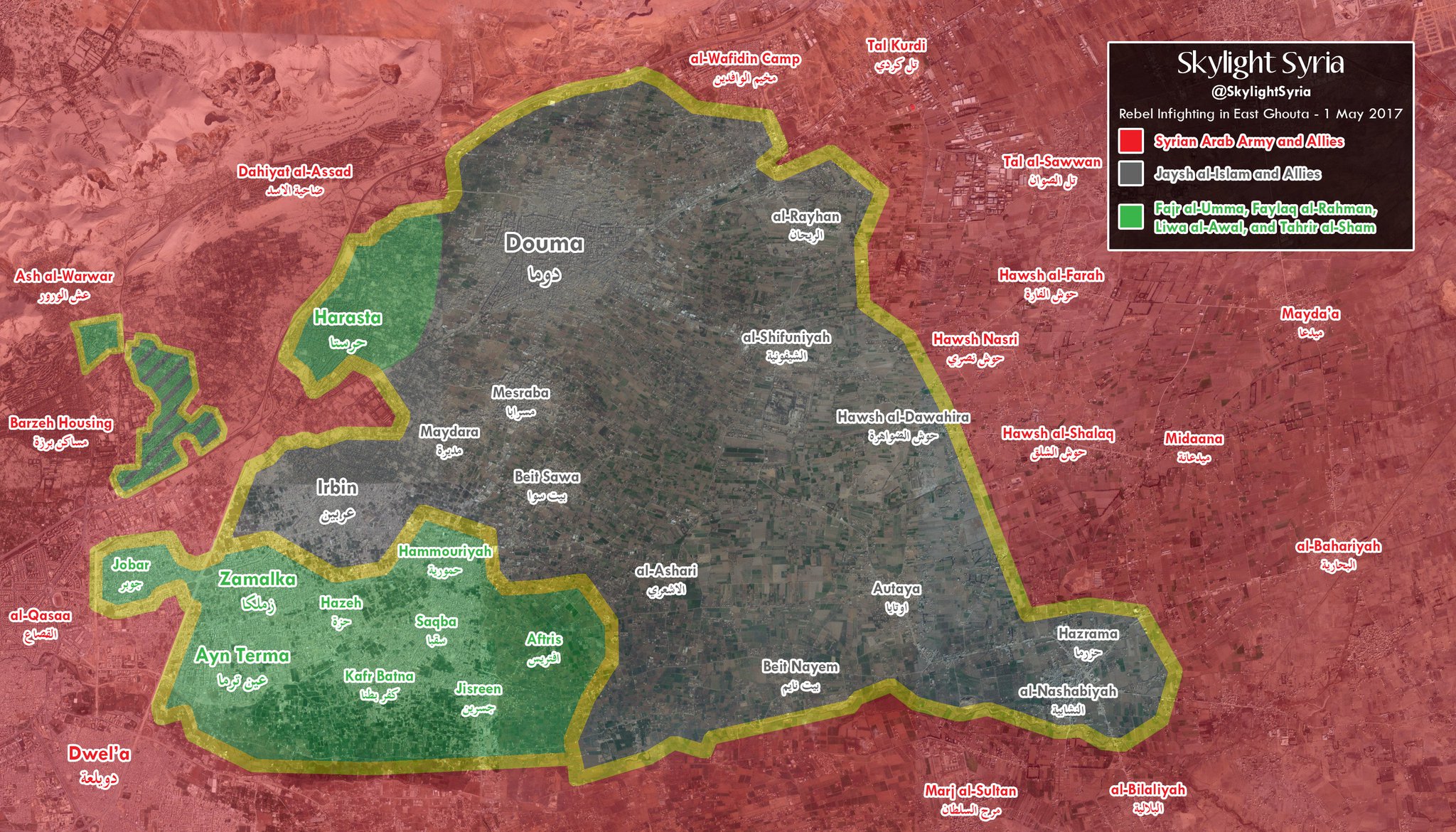




 Балтийский флот: 336-я ОБрМП (879-й ОДШБ этой же бригады);
 .
.


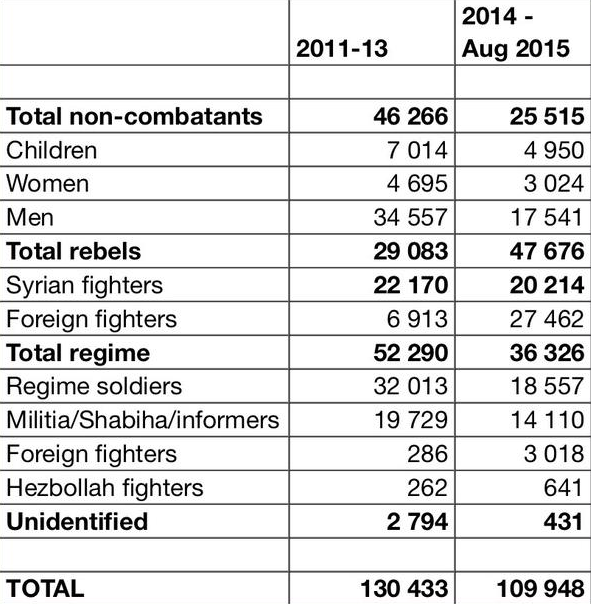



 ): плащанията на компенсации за ранените, осакатени и убити (близките им) от тези опълчения е отговорност на Ислямска Република Иран.